Tag Archives | differences

Being accepting of autistics that wish for a cure for autism

A recent news story, filled with a lot of science and interesting information, also included the insight from a man with autism, named Jeff Hudale.

You can read the news story here, in fact, I suggest you do: What’s Different About The Brains Of People With Autism?

Now, the science behind the story and the things that they are finding out about the human brain, specifically the differences between the typical and autistic brains, are really quite amazing.

But I would like to focus on the very last part of this piece, where Jeff Hudale states:

“I don’t want to quit until they finally can get this set right and get this thing eradicated,” he says. “I’d like to have some semblance of, just be a regular person like everybody else.”

There’s been a lot of talk about this through out the autism community but despite the attention it’s attracting, I see very very little (none to be honest) support or even acceptance of his feelings.

The general consensus that I see from people is that it’s sad that he feels this way and that he’s simply confused. That somehow it’s the life time of bullying, judging and other messages he receives either intentionally or unintentionally, that has caused this man to think of his autism in such a negative light.

There’s a lot to take in there as you begin to wonder if his parents had pushed for a cure or treated him differently because he was “broken.” Keep in mind, at 40+ years old, his diagnosis came at a much different time than how things are today.

Was he raised to be proud of himself or to always be aware of his differences. Did he read a lot of what the media had to say about autism and reflect those things inward?

Did years of bullying or lack of friends cause him to hate autism for making him the way he is?

Generally, it comes down to outside forces.

Put it this way, when we generalize his reaction into a “who said what to make him feel this way”, we are sort of dismissing him entirely and “putting the blame” on others.

That’s a nice way to look at it, to be honest. It means there is nothing wrong with him, it’s society that got to him and made him think this way.

However, the “nice way to look at it” isn’t always the honest way to look at it.

See, I like this news article because it’s honest and real. He is not the first autistic I’ve heard of, or even talked to, that has expressed a desire to be rid of autism. Or to use the “fighting words” version… to be cured.

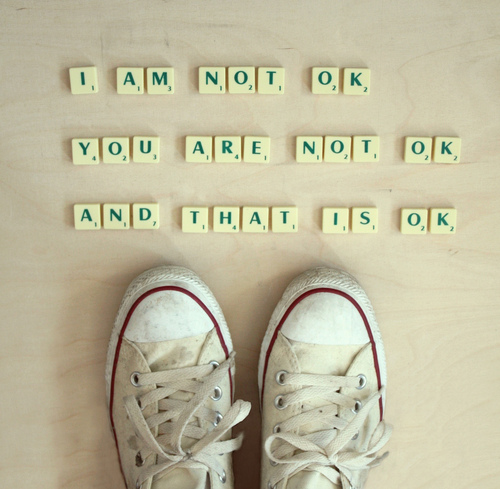
I think, and this may just be me, but not everyone needs to “just accept it” and “just be proud of it”… some people don’t and never will. They simply wish that they do not have autism.

While it’s not the approach I take nor is it what I suggest, as it is obviously negative and self defeating, it is a reality.

not okIt’s a reality that should not be hidden or ignored.

Sure we could just say that Mr. Hudale should just be happy with himself despite what anyone else thinks but that’s what we think of his life.

That might not be so easy for him to think, nor is it a requirement. We can’t just demand that of him.

Wouldn’t that be more of the “stop thinking so differently and conform to what the rest of us believe!” mentality anyway?

Besides, this line of thinking ignores the simple fact of what autism really is… a disorder or disability.

There are a great many struggles, heart aches, things you can’t do, negative messages and so much more that you have to live with for your entire life when you have autism.

Some examples for some autistics include never going anywhere loud (concerts, subways, movies, etc), never being able to play sports, never being able to make friends and the list goes on and on. I couldn’t possibly list every possible thing that autism could limit or cause you to never experience at all.

There is just so much negative in life that comes with having a disability (or disorder) that it would be a bit naive to assume that it’s only due to bullies or other people that a person would wish to not have that disability.

Now, I’m not saying that it’s never the case. I think it’s safe to say that some people do hate autism or what ever disability they may have simply because of how it causes others to treat them or how others look at them.

Perhaps some of those people could grow to accept and maybe even love having autism if only people were more accepting of them.

But I think it would be a stretch to think that is true of every single person.

Some people may just wish to no longer have autism because they simply do not want to have autism. No matter their age, no matter what others say or do, no matter what you or I think they should feel… they just don’t want to be autistic anymore.

And we need to be accepting of that too.

Acceptance means we that don’t judge people for how they feel or what they think whether or not we agree or even understand it.

That goes for people who are not proud of having autism. Not just the people that are.

Let’s talk to them. Not ignore or dismiss them.

Comments { 14 }

Understanding and acceptance means listening, even if you disagree

Understanding
Adjective: Sympathetically aware of other people’s feelings; tolerant and forgiving: “people expect us to be understanding”.

I started the Facebook fan page called “Autism Understanding and Acceptance” a while ago with the goal of moving beyond awareness. What this means is that, rather than just simply knowing that autism exists, we must begin to do one simple, but very difficult thing… listen.

We must listen to autistics, parents of autistics, “experts” and even those that we might not want to listen to… the bullies, the disbelievers, the critics… the haters.

And this is quite contrary to what we’ve always been told and have always believed. We’re supposed to ignore the haters. Ignore the ones who’s only goal is to make you angry.

I hope to explain why, at least in my opinion, it’s important to listen.

understandingThe misconception of what it is to understand

First of all, there seems to be this big misconception among some people that tend to believe that “understanding” is something that applies to others who believe the same thing that they do.

The thing that makes “understanding” so difficult is that it requires us to be willing to listen and understand the position of someone that we do not agree with.

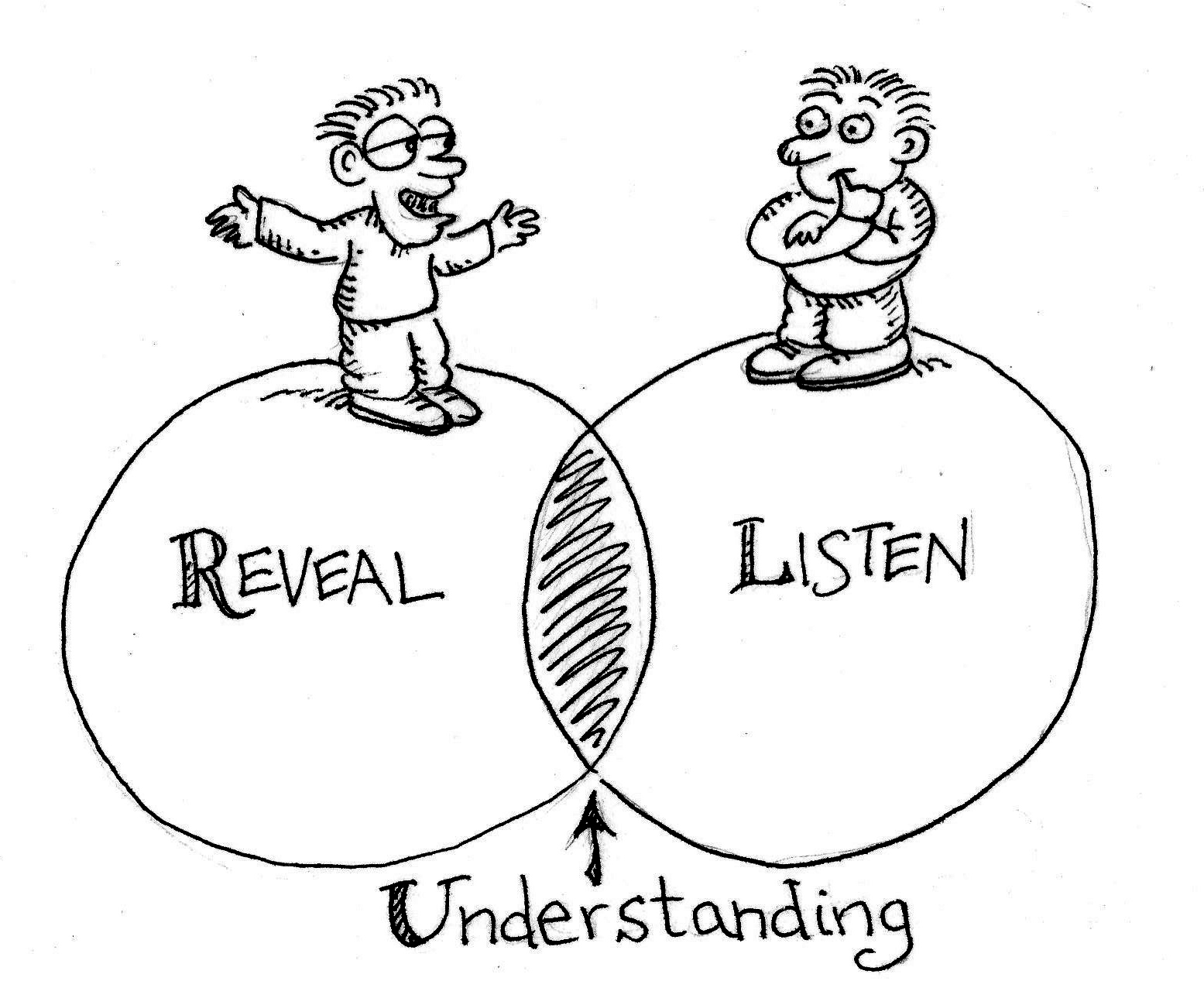
We don’t have to agree with them, just listen. Perhaps, through civility, there can emerge a mutual understanding of how each person has come to believe what they believe… even if, in the end, they still do not agree with each other.

For example, this whole post… I am trying to explain how I’ve come to believe that it’s important to listen to the critics and haters while you (the reader) may think that they should be ignored. When you finish reading this post, you may still not agree with me. But you may understand why I think the way I think.

In fact, I could argue that, to be truly understanding, one should seek out people that they disagree with, if only to listen to them.

It is not your job to change their mind. Nor is it really your job to listen. But it is best to recognize that they are two entirely different things. You can listen without having to convince them how wrong they are.

Understanding isn’t something that happens when two people agree. It’s the ability to comprehend why a person feels the way they do.

The uncomfortable position it puts you in

I won’t lie to you, you’ll get stuck in the middle of some sticky situations… and I’d like to give you my fan page as an example, particularly how it relates to the autism community.

When it pertains to autism, “understanding and acceptance” is often considered to be the opposite of “cure”…  there are those who want to cure themselves or their children of autism and then there are those who want for society to have more understanding and acceptance of themselves or their children.

This is such a small part of what it truly is to be understanding. It’s so much more than that.

It’s about understanding why a person might want a cure. What they’ve been through.

It’s about understanding why some people dislike autism, or any disorder or disease or their hair colour or how tall they are or their dripping kitchen faucet. Anything and everything.

It’s about remembering… people are allowed to dislike something every bit as much as they are allowed to like it.

“Understanding” is not a thing that is to be thrust on someone that dislikes something until they learn to like it.

This means that, on my Facebook page, when I post something by someone who feels sad, angry, betrayed…. just… dark… it is I that comes under attack for it. Not the person that wrote it.

It also means that when I post something triumphant, positive, happy…  it is I that comes under attack for it. Not the person that wrote it.

Why? Because people have perceived notions of what “understanding” is and feel that I should share those notions. That by being “understanding” of their feelings… I should also have those same feelings… and only share things on the page which coincide with those feelings.

It puts me in the middle. And unless I share items with people that they are personally comfortable with, they will see me as not being understanding….  for they would not have shared it… because they do not understand it.

But no one single feeling will pertain to everyone. Which means there will always be someone that does not “understand” it.

I can’t win.

Acceptance for the win

Perhaps I can win though… not in a victory, holding up the trophy sense of the word… but by persevering.

You see, understanding and acceptance is not the opposite of wanting a cure for autism.

It’s listening. That’s all.

To those that we do not agree with and those that we do. To those who want a cure and those that don’t. To those that are full of hate as well as those that are full of love. Even to those that will never understand and accept us.

They are people, with valid opinions, feelings… lives.

And it’s true, they might be wrong. We tell ourselves there’s no reason to listen to someone that is wrong.

But how can we ever show them what is right if we can not take the time to understand why they are wrong or how they came to be wrong?

How can we ever hope for them to listen to us if we can not take the time to listen to them?

Besides, right and wrong is such an abstract concept much of the time anyway. Differences, sometimes, are simply that. Differences. No right or wrong.

Understanding the “how” and “why” is the only way to understand the “who”… it’s the only way to move forward towards acceptance.

If acceptance is all you ask of others, then you have to be willing to do the same. Of all others. Not just those you feel comfortable with. Not just those that share your feelings.

Take the time to understand those that you disagree with completely… before you ask someone else to do the same.

Autism Understanding and Acceptance

Autism is not a superpower. Autism is not a curse.

It’s a spectrum of different stories ranging from one end to the other and only those who take the time to listen will be able to truly understand it.

It’s people. Autistic or not. Happy or not. Angry or not. They’re all people.

And they might not understand us. They might not agree with us. They might not accept us.

That doesn’t mean that we can’t take the time to understand them. All we have to do is listen.

That’s what understanding and acceptance is.

Perhaps you disagree. And that’s ok. At least now you understand what it is to me.

Comments { 4 }

AutismFather to “I Wish I Didn’t Have Aspergers” – An AutismPositivity2012 Flash Blog Event

autism positivity flash blogDo you really wish that you didn’t have Aspergers? Do you really think that your life would be better or easier?

There’s a lot of advice that I’m supposed to give. Most of it can be found here: Autism Positivity Day Flash Blog

While they all do have some great advice, and I do recommend reading them all, my advice is a little different.

You have something that most people do not

The sad truth is that life is hard for everyone. Even kids that have billionaire parents find life to be pretty hard from time to time. Just for different reasons.

The thing is that most people don’t know why their life is so hard, it just is. They feel that the universe or fate itself is against them.

Think about it. You have an advantage. You know exactly what it is that’s making life hard. It’s not fate, it’s not the universe… it’s Aspergers.

The thing is, knowing what you’re up against gives you the power to change it.

See, I didn’t know about autism or Aspergers until my son was diagnosed with autism just 4 years ago. Even worse is, I didn’t know that I had Aspergers myself until just recently.

That’s the thing… I too felt like the universe was against me. I had no friends, felt alone all the time… life was not just hard, it felt far more difficult for me than for most others.

But I didn’t know then, that I had Aspergers. I didn’t know then, that there was something very specific that was holding me back.

genius vs workThe real problem: Focus + Time

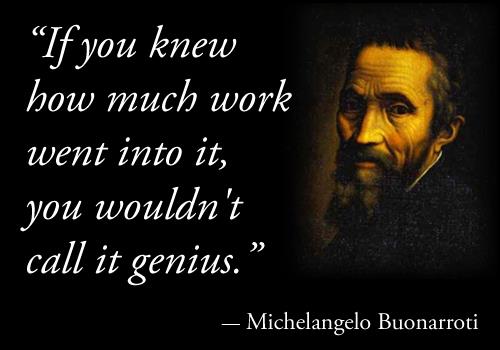
Pretty much everyone in this world is capable of greatness if they focus all of their time and energy into something that they are passionate about, that they really love. And that’s because they get to be really really good at it.

It just so happens that this is especially true of people with Aspergers because one of the defining characteristics of Aspergers is the ability to focus, almost obsess, over certain areas of interest.

What I find is that I sit, wondering why my life is so hard. Or, I wish that my life made more sense. Or I wish that I could just have fun at parties like everyone else. Or I wish….  well, sometimes I just sit and stare at the wall actually.

The point is, time is not on our side if we’re not actually using it properly.

The biggest problem is when we realize that we’re adults now, stuck in a dead end job, and that all of that time that we spent wondering or wishing could have been put into reading, learning, practicing, experimenting and just doing… the things we love!

This is true for most people, by the way, it’s just especially true for people with Aspergers. Because we’re especially bad at time management (judging the passage of time) and we’re also especially bad at handling guilt, anxiety and all the wonderful feelings that come with being alone and/or unable to handle social situations.

And so we dwell. And time passes us by.

Until we wonder why we’re not good at anything. Why we’re alone. Why life is hard.

And we think… if only we had used all of that time, staring at the wall, to actually get better at something.

Fight fire with fire

You have Aspergers. You wish you didn’t. I get that. All of my life, I wished the universe wasn’t trying to keep me down.

Sadly, I never had much of a chance against the universe. But it turns out that the universe wasn’t my problem.

I really wish I had known that I had Aspergers because I could have stood a chance against Aspergers.

Here’s why….  focus + time. Don’t let them both pass you by. Don’t try to fight it.

No, you might not be super smart, or have a photographic memory or the ability to play music just from hearing it one time… but you do have a gift.

And just like the mind readers in comic books, that need to learn how to use their gifts so that it can go from feeling like a curse to feeling like a super power… you are going to have to learn it as well.

And it will take time. And it will take hard work.

But that’s the thing. It’s within your control. Not the universe. Not fate. And certainly not Aspergers.

It’s yours to own.

Don’t wait 20 years to look back and think of what you could have accomplished with all of that wasted time.

Look ahead 20 years and imagine all of the things you can accomplish… if you focus.

Obsess over something and do it.

Don’t waste time now and you’ll have no regrets later.

Comments { 1 }

I have Aspergers – Part 3: Life after an autism diagnosis

For more on this series, go back and read part 1: who I am and part 2: getting the diagnosis.

In the middle of my 3+ hour assessment, the doctor took a moment apart from the testing and asked me “so what exactly is it that you’re hoping to get out of this? What are you hoping will happen if you are diagnosed with autism?”

I swear to you, with no exaggeration, I had rehearsed answering that question in my head at least a dozen times prior to going into that assessment but the moment it came out of his mouth… I didn’t have an answer.
changeChange

Up until the doctor had asked me the question, out loud, I had always assumed that nothing would change. That I really only wanted the diagnosis for my own curiosity, to answer questions I’ve had and to maybe help me with my own identity. Not just for myself but for where I stand in the autism community.

But when he asked me… even though I heard the specific words… my mind told me that he had actually said “what do you expect to change?”

And I had nothing.

I’m a grown up now. I don’t change. I have always been how I am. I always will be.

A doctor telling me I have autism certainly wasn’t going to change that.

In fact, if anything… it was going to cement it!

If I am how I am because it’s a part of who I am… do I even have the choice to change it?

I thought about my son, Cameron, who’s been diagnosed with autism for 3 years now… take social gatherings as just one example. I know full well that he will never ever enjoy social gatherings, much less want to go to them. I know that he is going to have to if he is to learn to cope.. but that being who he is… he’ll never actually want to go.

And I can’t change that no matter what I could try or how much I could want to. It’s who he is.

If I come to accept that in my son, that there are just some things that won’t and can’t change for him, I would have to do the same for myself.

Line of thinking

So I get to wondering why I heard a very different (yet kinda similar) question in my head than what actually came out of the doctor’s mouth and I start to wonder why I am so concerned about whether or not I could change even if I wanted to.

My wife accepts me for who I am. I mean, she married me… she must. But even more so since we came to the realization that autism would explain a lot about me. Far more, even still, since I got my official diagnosis and confirmed everything.

Still though… a part of me doesn’t want her to. She shouldn’t have to accept that I won’t change for her. Wait, let me rephrase that…

She and I have come to accept that our child will always be who he is, not just because of who he is but because autism kind of enforces that more so. He’ll never like some things, he’ll always obsess over other things, he’ll prioritize things differently than most people might… we want to help him with these things but accept that it’s just how and who he is.

I love and cherish my wife for being willing to do the same thing for me but I really don’t want her to have to do that. A marriage isn’t about one person doing all the changing while the other does not, whether due to a disorder or not. It’s supposed to be a compromise and a team effort.

The diagnosis really hasn’t changed anything… not yet. And while I feel like it should have given me every excuse I would ever need to not even try to change anything… it has actually done the opposite.

No, I don’t expect that I’ll ever enjoy social gatherings or anything that I’ve never enjoyed in all my years thus far… but still, I want to do better than just “cope”. I want to prioritize differently. I want to do better.

The wonderfully unexpected outcome

One could argue that a strong desire to make my marriage work even better than it did before is the best one could hope for from getting a disorder diagnosis… but actually, it’s not the best part.

The day that I received my diagnosis, I had my son Cameron sit down after school so that I could tell him the news.

I asked him “Cameron… who in our family has autism?”

He replied “Me.”

I said “Well, I talked to the doctor today and found out something new… you’re not the only one in our family that has autism.”

He looked at me said “You have autism now too?”

I told him “Well, I think I always did but now I know for sure. So now I know, and you know, that you’re not the only one with autism.”

He kept his head down as he played with his toys.

I asked him “So? How does that make you feel?”

He said “good” and left to play.

A couple of days later, while the four of us (myself, my wife, Cameron and his little brother Tyler) went swimming at the local pool, Cameron and I were off by ourselves and he said, “Dad, you know why you and me are the same and Tyler and mom are different?”

I said “No, why?”

He said “Because we have autism!”

Since that day, he’s been quite excited about how he and I are the same… and to be honest, so have I.

When I think about the future he has ahead of him, the great times and the struggles that I know he’ll have… I know now that I’ll be able to help him in a way that I never could have before.

I mean, I’m still me. It’s not like the diagnosis gave me Aspergers. I had it before hand. But now? Now that I know it and now that he knows it… he’ll know that I understand what he’s going through.

He’ll know that he can talk to me about just about anything without worrying that I’ll think he’s weird, or strange or.. what ever.

What ever may come, I’ll be there for him. And he knows it.

He’s already a lot happier. He already feels less alone.

That alone makes the diagnosis… no, it makes my entire life worth it.

going forwardGoing forward

Everyone handles news differently, and life situations, goals, stresses… well, you get the idea. So I don’t expect that anyone else would receive an autism diagnosis and feel motivated to change. In fact, if I was to guess, I’d imagine not many have that same reaction.

But that’s part of the beauty of the diagnosis, I think. You never really know how it will affect you until after it does.

You can practice the things you’ll say and prepare for how you want to feel about it… but you just won’t know until after the fact.

And it’s true, doctors could get your diagnosis wrong just as easily as you could have gotten wrong yourself. So no, it’s not a guarantee… maybe I was sure, maybe the doctor is sure… and yet, maybe I still don’t actually have Aspergers. Seems odd to think about, doesn’t it? It seems odd to say it… or write it.

Still though, as much as life has no guarantees for you and there will always still be some margin of doubt… it’s still very relieving be officially diagnosed with Aspergers.

Which is odd.

Think about it.

A doctor has just told you that you have a disorder… that you fit the criteria somewhere in their big book of “things wrong with some people” and you feel relieved by it.

It’s also weird to think that, my entire experience with autism and the autism community has been through my son. I write about him, I experience autism through him, I learn about autism from him… and yet, now, with a single line on a piece of paper… I realize that my entire experience with autism was actually in fact… my own entire life… and I didn’t even know it.

Well, ok, I sort of knew it, or suspected it, for a couple of years there, most recently… but you get the idea.

The point is, it’s a relief. Because I know what I’m dealing with now. I know what I’ve always been dealing with only… I didn’t really know I was dealing with it. To me, life was always just… hard.

Which brings me to my final thought…

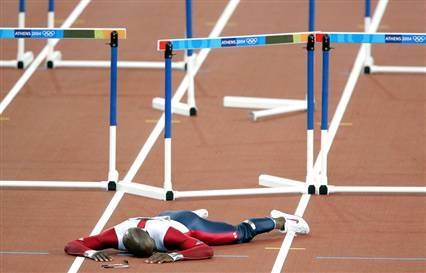
hurdlesHurdles

I know this young woman who’s whole life has revolved around her. She wouldn’t even let having a child at a young age interfere with that. She partied all the time, was only concerned about what her circle of friends thought about her, neglected her family, neglected her schooling, work and other responsibilities, she felt she needed to just do what ever she wanted to do and not care about anything else.

But then, not too long later, I noticed that she was starting to ask a lot of questions such as “why is life so hard?” and “why does everything have to suck for me so much” and “what did I do for all this crap to happen to me?”

I shook my head. I really did. Loudly. You’re trying to picture that right now, aren’t you?

Since getting my diagnosis, I’ve taken a long look at my life… there’s been a lot of unhappiness. There’s been a lot of discomfort. To be honest, I’ve asked a lot of the same questions. Why is life so hard? Why does the universe seem to hate me so much? Why does nothing ever seem to go my way?

But you know what? I finished college. I have been a web developer for over 12 years now and done well. I have a beautiful wife, two great kids and a roof over our heads.

I’ve made something of my life… despite, what I know now, is something very very real. A very definite hurdle that gave me a very real reason to ask… why me? Why is it so hard? Turns out there really was a reason.

One thing this diagnosis has done for me, as cruel as it sounds, is that it’s made me want to sit down with that young lady, put my elbow on the table and my chin in my hand, tilt my head sideways and say to her “Life is hard huh? Nothing goes the way you want it too huh? Please, tell me all about how hard it is for you, party girl.”

Because a few years ago, I’d still shake my head at her but I’d sympathize because my life was hard too. Sure, I know it’s because she’s done it to herself, where as I did not. But I didn’t know why life was hard for me at the time.

But now? Now that I know what I was actually up against that whole time? In comparison to her doing anything she wanted and yet complaining that she can’t do anything she wants??

Yes, I’m feeling a little… I don’t even know what you’d call it.

See, I don’t want to “smack some sense into her” so to speak (I’m not voilent so please take that as the figure of speech that it is), but rather, I’d really like to use what I’ve learned to help her see just how good she’s really had it all this time.

I’d really like for her to see that her biggest hurdle isn’t something that she can’t identify… it’s her. Her choices. And that she has the potential to do just as well, in fact, far far better than I have, if only she could see that.

If I could overcome what I didn’t even recognize, then she can certainly do better when she doesn’t have that to deal with.

All this is to say… I just want to help. I feel this diagnosis isn’t about me. It’s about that young woman. It’s about my son. It’s about my wife. It’s about anyone who reads what I write, looking for answers or inspiration.

Before, I’d say that the one with Aspergers (in this case, me) is the one that need not change, need not focus on anyone but himself following something like a diagnosis, to reflect and find purpose.

But now? Now I’m thinking… I do need change. I do need to focus on those around me. To help as best I can. To do the best I can.

My wife and I will be fine. I will do my best to meet her half way in all things.

My invisible hurdles will not be my son’s invisible hurdles.. they’ll be completely visible, and I’ll be there to help and encourage him over them.

And for those who think life is hard, or need a little inspiration or simply have a question… I want to be there for them. Maybe not in person, because the diagnosis didn’t hit me that hard! I still don’t much like social settings. But certainly, I can help online.

My blog, through social media, through my other writings… autism has been important for me for a long time now. Because my son is important. But now, now it’s important because it’s important to me.

I’ve said that 1 in 88 is not the number of people affected by autism, it’s the number diagnosed… well, now, some of those affected people are affected because of me.

And I am going to do everything in my power to make sure that the effect it has is a positive one.

Comments { 6 }

The subjective relativity with which we define “normal”

Normal… that peculiar notion of fitting in with those around us. Not with society… but with those around us. In highschool, some people felt it was normal to be with the cool kids, others with the nerds and so on. At work, for me, the designers tend to fit in with other designers more so than programmers and programmers tend to fit in with other programmers better than designers.

For parents, we want our children to be normal in the sense that they feel comfortable fitting in with other children that are good influences. If they tend to fall in with “the wrong crowd”…. then perhaps normal to them is something that we (the parents) won’t be too comfortable with.

For those of us with special needs children, we think of normal in an entirely different context.

Normal is much more abstract than all of that.

Normal is a conflicting array of all that we could ever wish for and the last thing we’d ever want.

not normalWhen our child is born

A funny thing happens when we have a child. I like to call it “their life flashing before your eyes.” They’re born, you flash a glimpse of their entire life… in contrast to when you are dying and you flash a glimpse of your own entire life.

Essentially, we see a fresh new start with limitless possibilities and all of the ways our child’s life can be so much better than our own was.

With that comes a very strong desire for our child to be anything but normal.

We see them standing against the crowd, standing up to bullies, being able to think differently and creatively… all of the wonderful qualities that makes an innovator, trail blazer and leader.

The last thing we want for our child is to be… mediocre… average… normal.

Growing up normal

The whole problem with the dream of bringing a child into the world that will be anything but normal is that we teach them from day one to be exactly that… normal.

Do as your told, eat all your food, say please & thank you, respect your elders and on and on and on… they’re all good things for people to know and do. But without really putting much thought into it, you are setting your child on the path to being normal.

We send our child to day care, school, play dates, the park… all in an effort to make friends like everyone else. To go to birthday parties like everyone else. To just fit in.

Oh, we still want for them to be great… to be smarter than the other kids, to get straight A’s in school and to be the cool kid that others want to hang out with.

But we sort of want them to do it the ‘normal’ way.

Then comes the diagnosis

Chances are, if your child has autism, you knew before the diagnosis that something wasn’t… dare I say it… normal.

But receiving the official word from the doctor is usually the moment that it truly sinks in for us and our notion of just what was and wasn’t normal is completely changed.

It’s pretty much at that point where all of the optimistic dreams of limitless possibilities leave us and we look at our child wishing for exactly the one thing that we didn’t want for them… to be normal.

The talking comes later, if at all, the toilet training comes later, if at all, the friend making comes later, if at all… and each step of the way, you’re thinking “not normal”, “not normal”, “not normal.”

But then…

Hopefully, if we learn how to help our child, where to get help, what works best and what doesn’t and we figure out what our child is truly capable of… we start to realize that all of this time, through all of these dreams and doubts… we got exactly what we wanted.

Our child is not normal.

We wanted it from the start, we dreamt of it and we wished for it… we just didn’t picture it this way.

But that shouldn’t get us down. Our child is beautiful and wonderful and amazing!

We find ourselves taking great appreciation in the nuances of speech, our senses, the patterns around us, the finer details, the strengths and weaknesses in others and ourselves, the world around us and in the power of unconditional love.

Our children continue to grow and show us just how much we’ve been missing in our lives. Just how much we were completely unaware of all around us.

We missed it… because we’re normal.

Our children are not.

Thank goodness.

Comments { 2 }