Posts Tagged sensory
Written on January 31, 2012 by Stuart Duncan

Filed Under: Autism
I have a bit of a booming voice, it can get loud… so when my dog is particularly bad or my boys stop listening and I raise my voice… it gets attention. I’m not yelling or screaming out of control by any means, it’s just… raising my voice is… loud.
The problem with this is that my son Cameron is especially affected… since a sudden loud voice like that can send him running to hide under some blankets.
At least when that happens though, it’s instant. I’m done, he’s done… we go about our day. No worries.
The real issues come into play when it’s not done and over in an instant.
A positive is a negative
Cameron shows some pretty amazing resilience sometimes when it comes to being able to handle himself. Yesterday was a perfect example of this.
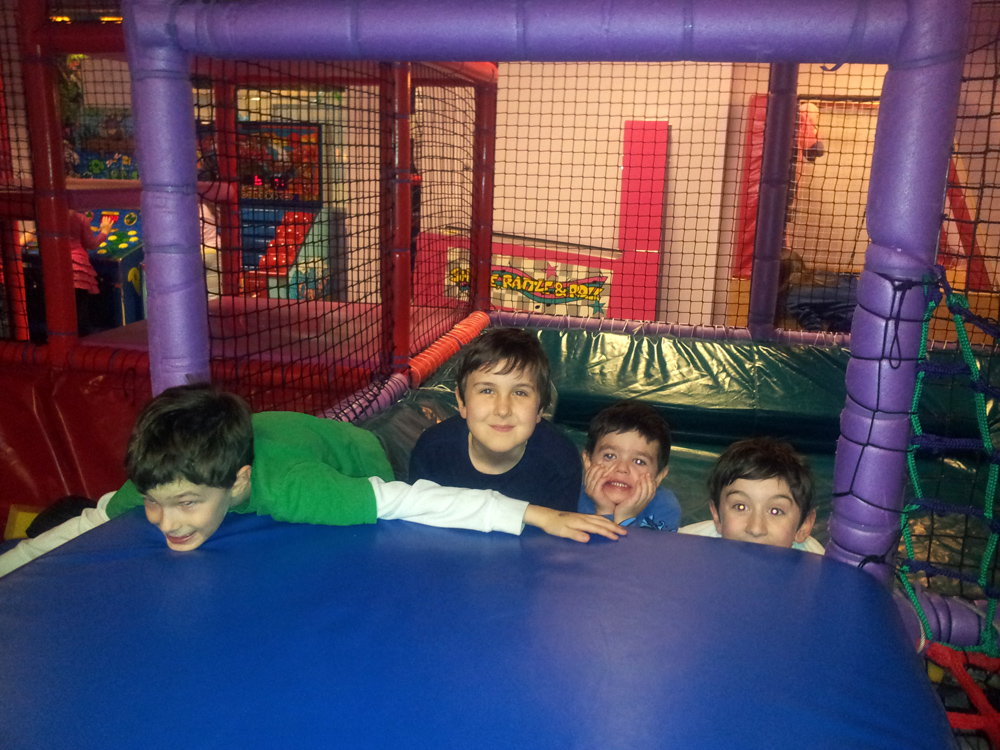
My boys were invited to a birthday party at an indoor playground where kids were free to just go anywhere and do anything. There were games all around, flashing lights and a huge network of netting and tubes to climb and go through.
A child’s paradise!

Cameron is in green
When we arrived the place was full which meant the entire place was just a wall of noise. An occasional crying child somewhere in the distance, lots of screaming and a bit of laughing mixed in.
Cameron and his little brother jumped right in and played just as any child should… it was quite nice to see. They had a lot of fun.
But I knew, I just knew that this was going to be too much. It was too much for me and I wasn’t right in the middle of it.
See, Cameron won’t just have a meltdown right in the middle of the place… instead, he’ll store all that pent up energy until he’s back home where he feels safe.
So, even though he can have a great time and handle himself quite well for quite some time… it comes with a price.
Solving the mystery
At first, this presented quite the challenge for us as parents as we’d have to figure out why our little guy was completely out of control for a day or two. To us, it would seem completely random that he’d just be really moody, extremely hyper and very much unwilling to listen to us or do the things we asked of him.
But it wasn’t random. It was actually very much a cause and effect situation (which most things are), where the effect was hyperactivity, irritability and lack of control… and the cause was over stimulation that no one had noticed.
What would happen is that my son would go to school and they’d have an assembly, or go on a field trip, or a party like the one I just described… something somewhere would happen and even though my son had a wonderful time and everyone thought he was just the most perfect little boy… there was actually a time bomb building up pressure, waiting to get home.
The biggest thing is, it’s entirely up to us as parents to solve that sort of thing too because no one else will ever see it. They only see the boy that holds it all together during the day.
Over time, I’ve come to recognize the clues though. For example, at that birthday party, when it came time for everyone to sit and have cake, all of the kids were excited.. but only Cameron bounced in his seat. Literally.
He had so much pent up energy in him, beyond what the other kids had, that he quite literally could not keep his butt on his seat. And while he was still quite happy and having fun, I knew that if he can’t keep his butt on his seat even after I ask him too, that it’s a sensory problem that’s been building up.
Something he just has to do for himself
This is one of those cases where, we as parents, could decide to just not go to those places so that we don’t have to deal with the after effects but that’s not very fair to him. He loves going to those places and doing those things.
We could read every book we have and talk to every professional we can find and try to set up systems and procedures to deal with the after effects at home in a constructive way.
But ultimately, this is something that he has to learn to deal with. I can help to guide him as best I can, help to calm him, focus his energies somewhere… but this is something that is likely to stay with him for the rest of his life.. unlike me.
And to be honest, I think he’s starting to get it. When he gets home, he’s still moody and hyper but he’s learning to take time for himself to go off and make believe something on his own. His little brother gets mad sometimes that he can’t go be with his brother but it’s obvious that it has to be that way.
When he’s given his space and allowed to get that energy out through pretending his favorite video games, pokemon or bey blade battles… what ever it is he needs to envision… it works for him. At least usually.
It’s great that he’s able to do that. And it’s even greater that he’s able to put it all aside in the moment and be “just one of the kids” when there is fun to be had.
It’s been hard for us to figure out and to deal with… I’m sure it’s been even harder for him… and we’ll always get people asking questions about it as it’s not quite ‘normal’… even by autism standards… but it is what it is and it works for us.
Written on December 13, 2011 by Stuart Duncan

Filed Under: Autism
This story begins back when he was just 3 months old and we were already having to buy him shirts for a 6 month old… born at a modest 7 pounds and 2 ounces, we had no idea that he’d grow so quickly.
At 3 years old, he was wearing clothes for a 5 year old… by 6, he was wearing clothes for an 8 year old.
Basically this meant that any clothes we bought him one summer would be donated by the next summer. In some cases, clothes we bought him at the beginning of summer were no longer fitting at the end of summer.
His shirts didn’t last very long but they usually survived to be handed down to his little brother or donated.
That brings us to our current problem…
Satisfying the senses
My son has taken to the habit of stretching his shirts such that the collar comes down across his shoulders, or he pulls his arms up into his shirts and stretches out against it.
Worse than that, he now chews on the collars and the ends of his sleeves as well.
The frustrating part of this is that just a year ago, we had a lycra bag that he could get into and stretch against as much as he wanted. This is an actual therapy tool for those that need that kind of stimulation.
Cameron had no interest in it.
Now we’re a year later and he’s running out of shirts.
We have an appointment to discuss this with his therapist but honestly, I am semi convinced I already know what needs to happen… we need to try what we tried before.
I don’t know if it will work, but if it does, it will certainly prove just how complicated Autism treatments can be. Not only does no one treatment work for every single person, or to varying degrees, but it also shows that what might not work at one time may work at another.
As children develop, as lives change, as situations are constantly in motion… the needs of the individual can change too.
It’s one of those very frustrating situations because not only is he going through shirts quicker than ever before but, as an Autism family, we have less money than ever to be replacing them.
We try to keep on top of him, to remind him to stop but honestly… have you ever tried to get someone to stop tapping their foot, pen, fingers, knee… those things that people do without even realizing it… how do you stop that?
It’s just that much worse when there’s an actual NEED to do it… such as sensory stimulation.
I guess we’ll just have to talk to his therapist and see what our options are.
Written on September 14, 2011 by Stuart Duncan

Filed Under: Autism
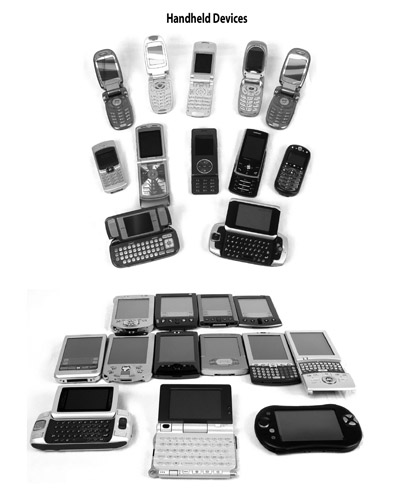
I mentioned on Twitter the other day that my son wants a Nintendo 3DS for Christmas and a few parents got into a discussion about how great the handheld devices were for children with Autism. Also, when I wrote about taking children with Autism out to restaurants, a lot of parents were quick to point out that they often brought along devices as well to help.
So what is it about handheld devices that are so great for children with Autism? What are the downsides?
It’s all about control
Having something right in your hand gives you complete control over it. That means that if you pause a movie, take a wrong turn in a game, flip pages in a book too fast… no one will be upset, no one will say anything… it’s only for you and you are in control of it.
You don’t have to wait for anyone to do anything, you don’t have to ask for permission before making choices… it’s all yours.
Doing what you love
My son loves to read books and play video games, which means that I can put a book in his hand or a handheld video game system and he’ll keep himself amused for hours. It’s what he loves and it’s right there in his hand.
When we parents think about bringing something to the restaurant to amuse our children, we don’t grab things they hate.. we get what they love.
Sometimes that takes trial and error but most likely you’ll find something pretty quick, especially since they get to control it.
Blocking out the world
The best thing about having something in your hand, engaging your senses is that it allows you to block out other input around you, such as sights and sounds.
If you have Autism, this could be huge. No more restaurant noises bothering you… however, if you’re a parent trying to get your autistic child’s attention while they’re playing a handheld game.. you may find yourself getting frustrated pretty quick.
Putting the three together… you have something you love, complete control over it and you can immerse yourself into that handheld world, blocking out the rest.
These are very important to children in general, more so to those that have Autism. People with Autism focus intently on the things they love, to the point where they need to block out the rest of the world.
Educational
Everything your child absorbs when they can control it, love it and focus solely on it is learned on a scale far greater than any other method.
And it doesn’t have to be an educational program or math book to do it either. There are life lessons in movies, there are problem solving and motor skill building qualities to video games. Your child will gain a lot of valuable knowledge and skill simply by being so engaged by that device in their hands.
There are no distractions, they love it and get to enjoy it even more when they have full control over it. What they learn… they learn. It doesn’t just go in one ear and out the other.
If you do get them reading a book, or doing an educational program on the ipad or something along those lines… all the better!
The one big downside
There is one major problem that most everyone will run into, Autism or not… but a child with Autism will find it even more difficult… that is when it comes time to turn it off.
The more a person loves something, is in control of it and is completely immersed in it as if it’s your whole world… the harder it is to have it ripped away.
I don’t know anyone that had an easy time getting a game, or book, or movie, or ipad, etc away from their child when they’re fully immersed in it. It’s going to be a battle…. at first.
But you can look at it more as a way to practice for the real world because let’s face it… if they don’t learn how to let go now… there will come a time when they’ll have to do it at school, work or just generally in public and if they haven’t had that practice, it could be a huge problem.
It used to be the #1 cause of meltdowns for my son.. he’d do great all day, get a game for a reward and then blow up when it came time to turn it off. But as I said, it “used to be”. He’s so much better now because he’s learned, over time, that it’s ok to put it down. It’s ok to put it off for another time because soon enough, if he behaves, there will be another time.
We just had to endure the meltdowns for a while to get to this point.
Handheld devices such as books?
You may have noticed I referenced books in with the other electronics in my examples… for Cameron, he loves books. A lot of the time, we can get a book from the library or from a friend and he’s more than happy to sit down with that for an hour.
He can’t read much of it (only really small words) but that doesn’t stop him from enjoying it.
You don’t have to force feed your child movies or video games… anything they love will do. Sensory objects, art work, books, money… yeah, my son also loves to sort out coins and such.
That being said, there’s nothing wrong with movies, games or ipads… they’re all helping your child to learn too. You may wish to limit those things a bit more but still, there’s no harm in giving your child a good game or movie.
The escape, the interactions…. all of it is not only good, it’s important. Your child may have a meltdown when it’s time to turn it off but it’s still valuable coping skills they’re learning.
Don’t feel like you’re doing anything wrong by letting your child stare at something in their hands for an hour or two… it’s good for them. It’s a valuable growing tool.
Written on August 2, 2011 by Stuart Duncan

Filed Under: Autism
I’m not really a fan of using sensationalist headlines to grab a reader but in this case, I think it’s warranted because the sad fact of the matter is.. it’s true.
A news article was brought to my attention called “Passengers Face Israeli-Style Behavior Screening at Boston’s Logan Airport” which didn’t mention Autism at all yet has a very real and very large impact on autistics.
The sentence of particular interest is:
Those who exhibit suspicious behavior like avoiding eye contact and struggling with answers will be pulled aside for more screening.
Does that sound familiar to you?
From the perspective of the TSA
Let’s look at this from their perspective. They need to be aware of anyone that looks suspicious, meaning anyone that looks like they could be hiding something.
I haven’t taken the training myself but it’s not a stretch to imagine these behaviors as indicators of deceit:
- lack of eye contact
- fidgeting
- lack of confidence
- anxiety
- inability to give strong, well worded answers
- inability to understand metaphors, innuendo, slang, sarcasm, etc from the interrogator
- unable to tolerate being touched
There’s more but you get the idea. The TSA would witness this from a person and have reason to suspect something…. prompting them to take the person in for further questioning.
Small rooms, very intense atmosphere, very imposing people… if you’ve ever been pulled in for more questions, you know that it’s maddening for the most confident of people.
From the other perspective
You and I recognize that list of “behaviors” as symptoms or signs of Autism. You and I also know that taking that person into a small room for further questioning will not go well.
How often have we read about police having issues with autistics where they simply did not know what to expect? The police, thinking they’re protecting themselves, react to actions they don’t understand from the person with Autism.
This can range from those considered “low functioning” (dependent) autistics to even those that live an independent life but simply aren’t ready to cope with such strenuous situations.
By the way, I’m talking about adults here. It’s not just children with Autism but teens and adults as well. Many people believe, and some studies have backed it up, that Autism is just as prevalent in adults (1 in 100′ish) as it is in children.
So if 1 out of every 100 people that walk through customs at the airport has Autism and a good percentage of those people have symptoms that could resemble “suspicious behaviors” according to the TSA’s training… this could get messy.
We can only hope
Let’s pray that someone there has a bit of foresight to recognize that some people with disabilities need to be addressed. They need to be aware that not everyone that refuses to look you in the eye has something to hide.
They need to understand that someone with Autism, having to get there an hour or two ahead of time and wait, with all that sensory overload all around them, having to be in line for what could be hours just to get to the security…. put it this way, the airport experience can elevate an autistics symptoms long before they ever get to the security personnel.
That will only make things worse.
I understand the need for safety, I understand the need to be certain… but disrupting people’s lives can be disastrous to them. Disrupting the lives of people with Autism or other special needs can be even worse.
A trip through customs, the way the TSA handle things, could leave a very negative, life long impression that can never be undone.
Is there a way to avoid this?
Well, if you have Autism or are with someone that has Autism, you could tell them right away so that they know.
However, this isn’t a guarantee. I mean, let’s face it… what’s to stop a terrorist from realizing the correlation between terrorist behaviors and Autism symptoms (maybe they read this post!!) and then use that as an excuse themselves.
It certainly wouldn’t be the first time someone faked having Autism.
So yes, do your best to make them aware and avoid the headaches in advance but don’t be too surprised if all of your attempts fall on deaf ears sometimes.
Conclusion
Let’s hope they’ve done their homework.
Only their awareness and ability to differentiate can avoid unnecessary altercations with special needs people. And ultimately, I’d think that they want that to avoid negative media attention.
Let’s hope that they can recognize the difference between an autistic and a terrorist.
…
I can’t believe I just said that.
Written on July 13, 2011 by Stuart Duncan

Filed Under: Autism
Cameron is just about to turn 6, in 15 more sleeps (as he calls it), but has only just started to actually eat solid food.
Well, that’s a bit misleading.. the truth is, he’s eaten pasta and potatoes and rice and such for a very long time but his potatoes were always mashed, pasta always soft… it’s been a constant ordeal at meal time.
For over 5 years
Any time we tried to get meat into him, we had to blend it or pick it apart into tiny little pieces that could be hidden in his potatoes. Like, tiny tiny.
Here we had his 3 year old brother eating pieces of pork chops, steaks, chicken… his potatoes were in pieces…. and yet his older brother was still getting a bowl of slop.
If you’ve ever questioned if autistic people could have texture issues with their food, we had living proof.
How did we change it?
Truth is, we didn’t. He did.
He decided when he was ready. We started slow at first, gave him pieces of potatoes instead of mashed… and for a long time, he wouldn’t touch it. Finally one day, he did.
After that, we started giving him small pieces of chicken… like, very little cubes. To our surprise, he tried them. He didn’t eat them, but he tried them.
We never stopped giving him those pieces though. We always presented him with the options, never being upset if he didn’t eat it. Eventually, he did!
Looking forward
It’s been a couple of months now, we no longer blend or mash his food for him. He now eats a few pieces of meat with his dinner, he now eats potatoes in pieces when the rest of us do.
We don’t have to boil his pasta to the point that it turns to mush.
He still doesn’t eat a very large variety of foods, it’s still mostly pasta, potatoes and rice… and he’s still on a rather strict gluten free diet, but now we can add in a few things here and there that he’s at least willing to try.
He’s almost 6… and it’s going to be a very adventurous year, because along with a whole new year of new discoveries and experiences, he’ll have a whole new diet. It’s very exciting!