Archive for the Autism Category

Stage Fright

Written on January 24, 2012 by

Filed Under: Autism

My 13-year-old son Alex stands in the orange stage lights of his school’s spring talent show. He’s helping his physical therapist hold up a big sign that says either CHA CHA or DANCE. I don’t have a chance to tell which the spinning signs says before Alex vanishes stage left in the Speedy Gonzalas whirl.

“Maybe he’ll be part of your road crew next year,” I’ll tell his teacher later, after the PT escorts him back to his seat.

“He was cocooning himself in the curtain,” the PT tells me, “and we figured, ‘Not today.’” She sounds likes she’s trying to comfort me about this, and I’m trying to decide if I need to be comforted.

Alex’s school holds a talent show every year – at least they have since he got old enough to attend 6th grade. Before that, every spring they’d have a carnival of games and music and face painting and stuff like that. Alex used to run away there, too. Last year in the talent show, he drummed. Bongos. I sat there watching his face and its Matt Dillon brows and downturned W of a mouth as his para sat too close to him for it to be normal and he drummed and looked out at the lights.

What does anyone see when they look out at the lights in an audience, their stomach a knot? What did Alex, with autism, see?

The bongos came up again last summer, when Alex and I were walking home from Target where we’d bought milk and we passed a bodega store at E. 108th Street and Lexington Avenue, where a man was pounding a bongo with skill. As if waiting for Alex, a bongo sat empty next to the man, and Alex sat down. To this day, I’m not sure if anyone in the crowd cheering the man or Alex and the bongos or both understood that Alex has a problem. They cheered and told me there was no problem. And there wasn’t.

But the show this year. It started a half an hour late, which seemed like a long time to ask kids with special needs to sit, considering that some had filed in early. I kept craning for Alex’s orange hoody. When I spotted it, I assumed that under the hoody Alex was wearing the tie-dyed white T that a few weeks ago, in the “communication book” home, we were told was the uniform of his performance.

Alex’s was one of the last classes to file in. He saw me in my seat. I asked his teacher if she thought it’d be better for him if I moved. She didn’t say one way or the other. I moved anyway, and Alex kept looking for me until he found me, and I waved. “You’re on first,” I heard someone say to Alex’s class, and they went out a door. When Alex appeared in the orange lights a moment later, he was still wearing the hoody. Where was the tie-dyed T, with all the preparation behind it?

I watched him on stage; I wasn’t proud but I wasn’t ashamed, either, as I saw him bend down and bolt.

————————

Jeff Stimpson is a native of Bangor, Maine, and lives in New York with his wife Jill and two sons. He is the author of Alex: The Fathering of a Preemie and Alex the Boy: Episodes From a Family’s Life With Autism (both available on Amazon). He maintains a blog about his family at jeffslife.tripod.com/alextheboy, and is a frequent contributor to various sites and publications on special-needs parenting, such asAutism-Asperger’s DigestAutism Spectrum News, the Lostandtired blog, The Autism Society news blog, and An Anthology of Disability Literature (available on Amazon). He is on LinkedIn under “Jeff Stimpson” and Twitter under “Jeffslife.”

Different Kinds of Special [Review]

Written on January 23, 2012 by

Filed Under: Autism

I received the book “Different Kinds of Special” this week, written by author and poet Donna Carol Koffman. She is the grandmother of a little boy named Reese that has autism and it is for him that she writes this… or at least, he was the inspiration.

As the description says: “In this book, Donna gives Reese a voice to teach young children empathic understanding, acceptance and inclusion.

Also, an interesting bit of trivia for those of you that have or get this book… the illustrations are done by Breanne Biggar but, one page, where the children are drawing on a sidewalk, you will see the wonderful art work of a young man named Devin, who has Aspergers. He was 6 when he made those drawings and you can read a bit about him at the back of the book.

different kinds of specialThe Book

The book is about a bunch of children all going to the park to play… but none of the children are the same as each other. This book explains very simply yet very clearly just how different each person can be from each other. Starting with the obvious, such as hair colour, height, weight and so forth, the book eventually gets into more distinct differences such as how some people are unable to walk (wheelchair) or communicate (talk)

The Story

While there really isn’t much of a story, it does take you along on a bit of a journey through the park. It’s kind of like people watching, but for children. As you go through it, you really feel like a child standing there while your mom or dad talks to you about what you see. And that’s how I felt, and I’m a dad. To invoke that kind of feeling in a reader means that the message is being delivered very well.

My Review

I read the book by myself while my wife read the book with my son Cameron. So I’ll give you an idea of what we both think.

For me, I found it quite intriguing that autism is never actually mentioned. It’s also quite brilliant, in that it’s just another one way that everyone is different. So rather than single out any specific disorder or ailment, you’re left to fill in the blanks as you read about those that can not speak, see, hear, walk and so on. These children on the pages all have different strengths, weakness, colours, sizes…  and they all have smiles.

I can picture my son in those illustrations just as I can picture other children that I’ve met through my life or that I know right now. They can all fit into these pages.

More so than that, I can see myself in many of the pages. As you read about how some children are shy, some aren’t, some don’t like to do some things, other do…  and some children cry because of how hard it is to make other people understand them… you get it. Both as having memories of that but also in understanding where her grandson as well as our own children are coming from.

My wife said:

The book gave a good sense of accepting those who have differences and allowed Cameron the opportunity to look passed himself and see others and accept and want to help them. We were able to talk about the book and explore ways to make people in our lives feel more welcome and loved even though they have differences. 

Together, we both felt the only criticism we could make is that it’s a bit of a dry read, in that there is no story and comparing differences makes for a bit of repetition. Our four year old lost interest half way through. Cameron, however, did not.

But it was never meant to be a story and no one will ever fault a four year old for not grasping the differences of all people. So while it may not make the best bedtime book ever, it does make for a wonderful story time book that really helps to reinforce acceptance within us all.

If more people read this book to their children, there would be far less bullying in the world.

You can buy Different Kinds of Special from Amazon.com for just $19.95 in paperback and read more about the book at http://lostforwordspress.com/

Know your child is how you want your child to be

Written on January 20, 2012 by

Filed Under: Autism

Whether you feel that Autism needs to be cured or not, we’ve all had that moment where we thought our newly diagnosed child was doomed to a complicated struggle of a life and that they will never amount to what others see as average, much less the lofty goals and dreams we had before the diagnosis.

There is certainly nothing wrong with this, it is natural. It is a scary thing to have happen to you and to your child.

Less than perfect

For many people, that feeling of disappointment and fear of the future passes. Maybe not entirely, but for the most part. They learn to accept that their child is how they are and that they’re perfectly wonderful just the way they are. It’s certainly not without it’s struggles but parents take each day as they are and love their child unconditionally… no matter what.

Then there are those parents who hold on to that disappointment and will always fear the future. They see their children as damaged or defective and seek vengeance (or justice) on those who are responsible. They will never accept that their child was meant to be how they are.. and who they were meant to be was robbed from them.

I don’t know who is right and I don’t know who is wrong, I don’t know if there is a villain to bring to justice… but what I do know is that no child should ever feel that their parent sees them as less than perfect… much less broken or defective.

Few exceptions

Even a child that does not speak, does not engage their parents, does not play and has all the other “severe” indications of “low functioning” autism can sometimes surprise us. The right tool, device or incentive can help some of these people “find their voice” and show the world what they’re truly made of.

It makes many people think that a lot of autistics have it within them to do this. You, and they, just have to find a way.

If true (which I believe it likely is, at least for some), then the things you say, do and even think will be picked up and even understood by your child. Even more so if your child is able to express themselves and communicate better.

Even if you try to hide it, if you truly believe that your child is broken or defective, it will affect your child. Perhaps the parent is a little less affectionate, perhaps they’re a little less encouraging… these things will resonate with your child. It may be on some subconscious level or it may just be a hint of self doubt that lives within them into adulthood.

Few children are able to excel despite a parent’s disapproval, few children are able to truly be self confident when their own parents do not believe in them first. Some children can overcome that but doesn’t a child with autism have enough to overcome already?

perfection

Unconditional love

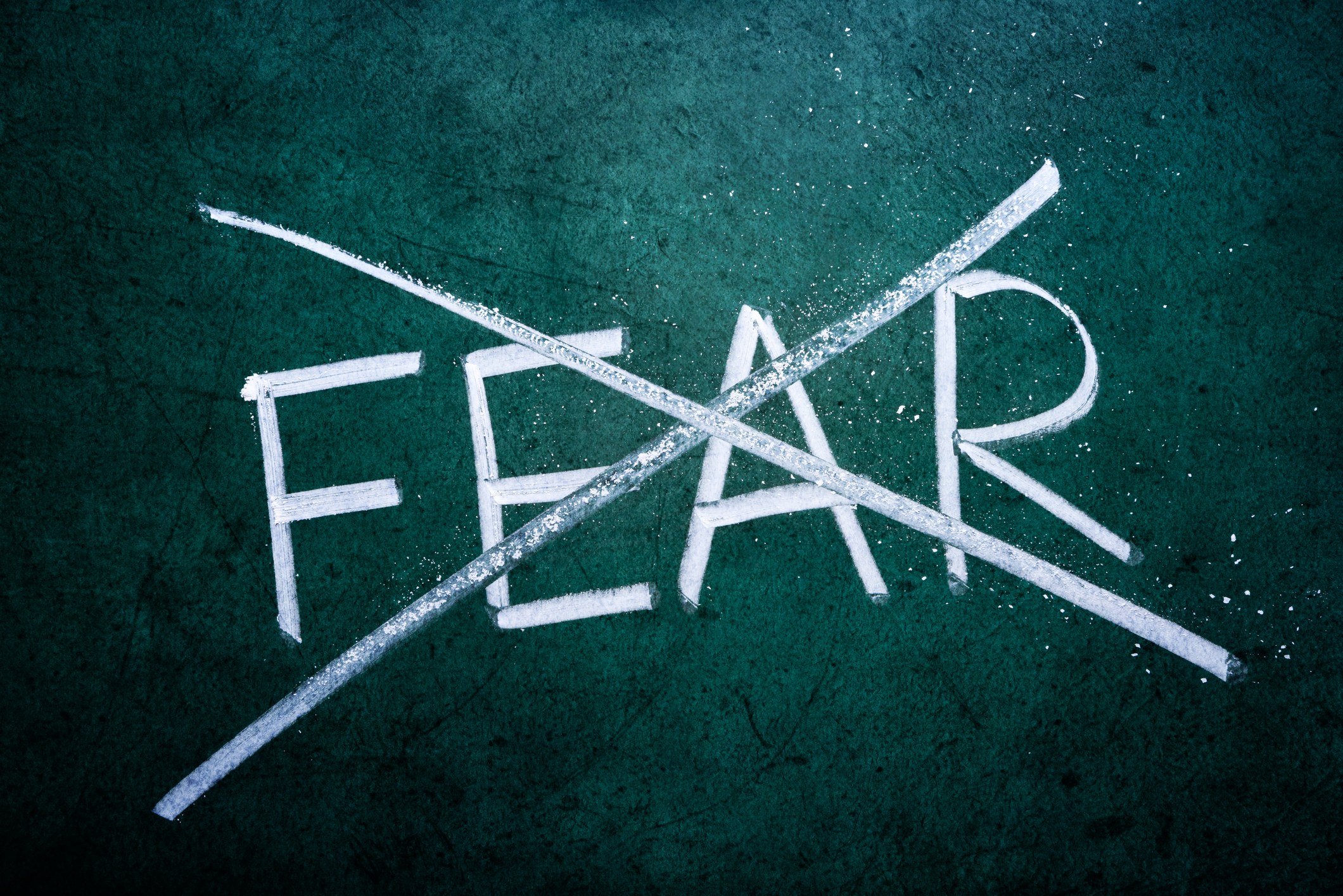
I’m not saying that you are wrong if you fight for a cure, I’m not saying you’re wrong if you are fighting to put a stop to what ever you believe is the cause of autism… what I am asking for is… please stop seeing your child as broken.

Accepting your child for who they are, right now, right in front of you… it does not mean giving up. It certainly doesn’t mean you don’t care. All it means is that you love your child, through and through, 100%, no matter what.

Know that your child is perfect, know that your child is who they are and encourage them to always be themselves. Know it.

Don’t just think it and don’t just make it something you say so that you can feel better about yourself for making them feel better about themself… you need to believe it. You need to know it.

This is your child and your child deserves that much from you.

Once you believe it, the real miracles start to happen.

The Autism documentary that will completely and totally shock you

Written on January 17, 2012 by

Filed Under: Autism

A few days ago, I received an email from a man named David, an autistic from France. He sent me a link to a documentary called “The wall or psychoanalysis put to the test for autism“.

The documentary that you are about to see was not filmed in the 1940′s although you will think it was. This film, out of France, was released in September, 2011 by Sophie Robert.

In just 52 minutes, you will see the culmination of 4 years of investigations among psychiatrists and psychoanalysis practitioners in France. Robert met over 40 professionals in putting this documentary together and yet, now that it is complete, 3 of those professionals are suing Robert in an effort to have the movie banned by the court.

I don’t want to give it all away but you will see Autism described as madness, a result of incest (or incestuous needs), a mother’s failing, a father’s failing and so much more. You will see a family that lived with and against this system.

This is a french film which means that English subtitles had to be added and they can be difficult to read at times. But it is still very much worth it to watch this film.

Awareness is more than just making the world understand Autism… it also means putting the past behind us and making things right. And watching this, while it may be painful or frustrating, it is necessary.

THE WALL, OR PSYCHOANALYSIS PUT TO THE TEST FOR… by runmagali
(If it does not load, hit reload/refresh or click the link above to view)

Now that you have seen the film, please check out http://www.supportthewall.org/ where every effort is being made to stop the abuse of autistics in France.

Starting to get international attention, they are planning on holding a press conference on January 26th in New York City to launch an international petition against the abuse of autistics in France.

Coincidentally, that is also the date that Sophie Robert will receive her court decision… will the movie be banned or not?

Share this movie. The more people that know the truth, the sooner this “psychoanalysis” can be stopped.

Humans are social beings. So if you’re not social, what are you?

Written on January 16, 2012 by

Filed Under: Autism

Taken from Wikipedia:

Humans are social beings. In comparisons with animalia, humans are regarded like the primates for their social qualities. But beyond any other creature, humans are adept at utilizing systems of communication for self-expression, the exchange of ideas, and organization, and as such have created complex social structures composed of many cooperating and competing groups. Human groups range from families to nations. Social interactions between humans have established an extremely wide variety of values, social norms, and rituals, which together form the basis of human society.

This makes me wonder… what about the people who are not adept at utilizing those systems of communication for self-expression? Is this why some people instinctively see special needs people as less than human somehow? Is this why, when a person is unable to use those systems, to communicate or demonstrate self-expression, they are thought to be “in their own world?”

It sounds a little harsh, to think that, if a person isn’t social, that society would view them as “less than human”… but really, this shouldn’t be new to anyone. Aristotle thought this way too.

“Man is by nature a social animal; an individual who is unsocial naturally and not accidentally is either beneath our notice or more than human. Society is something that precedes the individual. Anyone who either cannot lead the common life or is so self-sufficient as not to need to, and therefore does not partake of society, is either a beast or a god. ” 
― Aristotle

Granted, he included the “more than human” but that’s likely in reference to the savants or prodigies that lock themselves away to work tirelessly on what ever it is that they do.

I mean… a beast or a god? Really?

how to win friends

No wonder this sells so well!

Says Who?

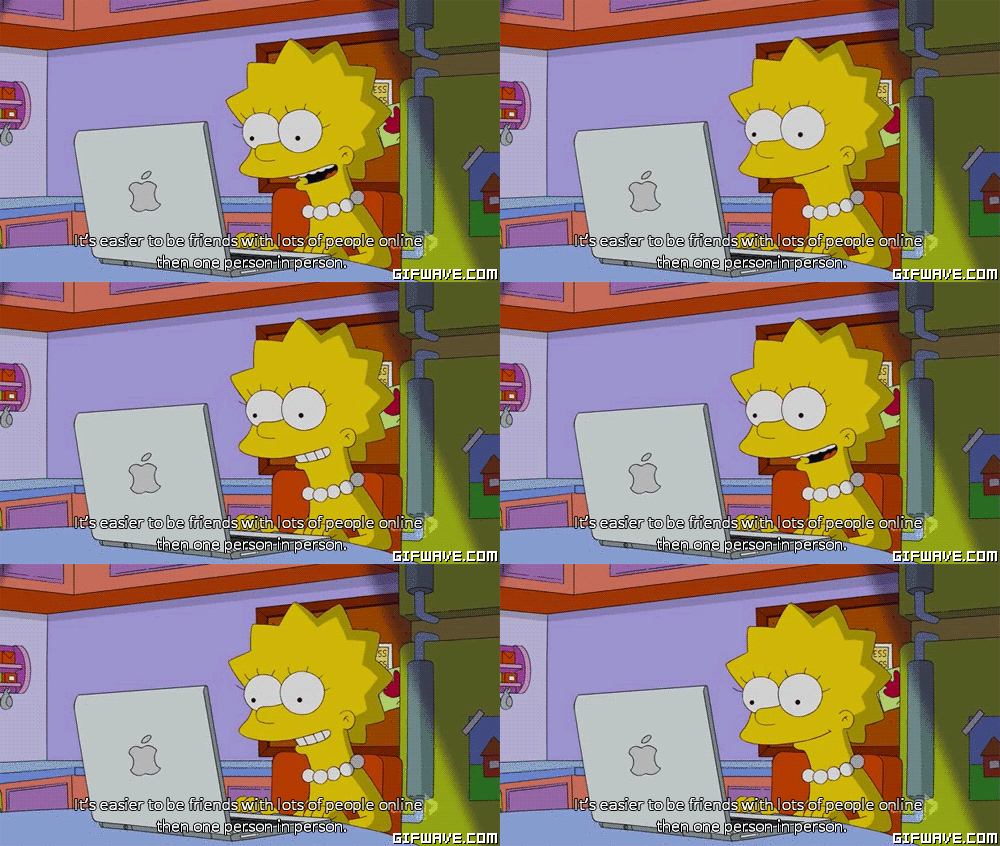
Personally, I have always questioned: If everyone is different, why would everyone have to have friends?

Think about it. Every single person is different. All seven billion. And yet poets and story tellers continue to tell you that everyone needs someone to love and everyone has to have friends.

Why?

Why can’t a person be ok with not having friends? Where did the term “hermit” come from if there aren’t people out there who prefer to be left alone?

Feeling Lonely

Everyone feels lonely sometimes. People that have more friends than they can count can feel lonely sometimes. Is it more likely for a person that has no friends? Sure, but perhaps there’s a reason for that besides the fact that they are alone.

Think about it… why would a person who prefers to be alone be lonely because they are alone? It doesn’t make sense.

In my past, when I had no friends because I was working so hard, I felt very lonely and very depressed. But it wasn’t because I had no friends.

I felt that way because I was conditioned to. Every poem or story I read, every movie I saw, every person I talked to would tell me that I had to have friends…. more so, I had to have love.

Not one person or piece of entertainment told me that it was ok to be alone. In the movies, the hermits would eventually find a family or a place to live and “finally be happy” with others. The others would either eventually commit suicide or “remain alone for the rest of their days”…  ugh.

Be Yourself

Other than highschool peers, people will tell you to be yourself. That you’re unique. You’re different. There isn’t another person out there like you.

But you have to have friends, like everyone else, because everyone else does… or else you’re “beneath our notice”.

It’s very contradicting and it’s very belittling and it’s very confusing.

Sure, a lot of people without friends do not choose for it to be that way and therefore, have every right to feel lonely and a little down. But some people want to be that way… they eventually find themselves depressed and aren’t sure why.

In either case, don’t listen to Aristotle… don’t listen to the media, entertainment or poets… it’s ok to have no friends. It might be temporary. It might not. Depending on what you want.

But be yourself.

Who knows, you may think you want to be alone only to find that you really don’t… once you are confident enough to be yourself… confidence attracts… friends!

But you are still very much human, friends or not… love or not. Want it, don’t want it… it doesn’t matter, just so long as you are yourself. Friends and love, they’re out there. I won’t think any less of you for wanting them or not wanting them.

You don’t have to have friends to be happy but it certainly helps to be happy if you want to have friends.

So either way… be happy for being you.

Translate

Subscribe by Email

Autism Books

Cameron – My Son

“Autism can be a real pain in the as... pergers.”
by Stuart Duncan

MY STORE


Organic Men's T-Shirt
Price: $28.00 - Buy Now

Tag Cloud